
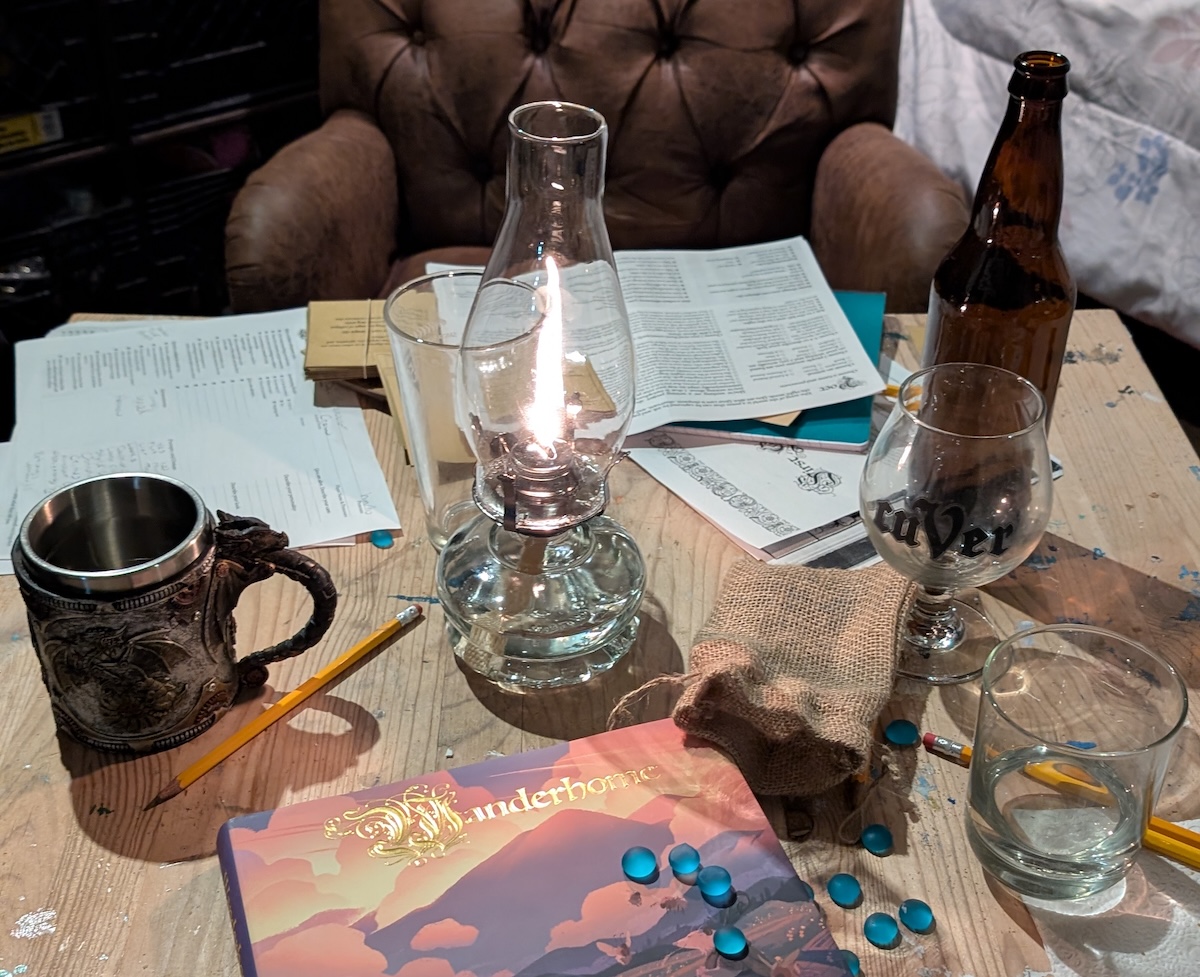
Last night, I led my first game of Wanderhome. As I’ve written, I discovered Wanderhome this past May at Kublacon and immediately fell in love. Now I’ve also played the game as the Guide (Wanderhome’s word for the DM), and I’m just as pleased with it. Our group arrived in the river town of Weighfare and ultimately saved the town’s ancient, holy redwood grove from dying by restoring its symbiotic relationship with the beetles who lived nearby. We genuinely co-created this narrative, and I’m happy to say that it was more beautiful and satisfying than anything I could have created on my own in the same amount of time. That said, I want to share one piece of advice for other Guides, that I wish I’d had before I started.
I want to be clear before you read any further that what I’m about to advise isn’t the only way to play Wanderhome, or the right way. It’s just the way that I want to play it. If you don’t want that, feel free to ignore my advice.
I thought that I wanted my players to make cozy choices. So I told them up front was that, in Wanderhome, you take actions by spending tokens; and you gain tokens by undertaking various “cozy” acts in the game. In that way, by immersing all of us in cozy acts, Wanderhome creates its cozy vibe.
It wasn’t until we got to our first tavern that I realized I’d given them the wrong advice. I had actively co-created the tavern with my players by asking them specific questions about it. Once we settled down by the fire, I expected them to start spending tokens to act on the notes in their character sheet about their motives. Instead, they sat there and stared at me until I invented a clearly-upset NPC who entered the room, to whom they could react.
At this moment, I realized that the core conceit of the Wanderhome game that I really wanted to run was not coziness. It was that the players should decide the major narrative beats, and I would react to their choices. (My ideal game of Wanderhome, I now realize, is quite similar to the ideal game of D&D described in The Gamemaster’s Handbook of Proactive Roleplaying, by Jonah and Tristan Fishel.) They didn’t understand that (because I hadn’t explained it clearly), and were instead waiting for me to drop in encounters to which they would react.
I clarified this with them at that time, and the story moved forward constructively. However, whether because I hadn’t set that expectation up front or because it was a new idea, I had to keep reminding the players of it throughout the game. For example, at one of the story’s climactic moments, one player wanted to solve a problem by using his moth-calling whistle to summon a messenger moth, who could then carry a letter to another character. I loved this idea, and asked if he was planning to spend a token to “solve a material problem” (a Wanderhome option). He responded, “Why would I need a token? I have all of the required equipment.” I had to remind him that having the required equipment wasn’t a guarantee of success; in our game, he (or another player) needed to spend a token to create the outcome that he wanted.
So if you want to play a game of Wanderhome that shares story co-creation more evenly with the rest of the group, I encourage you to share with them that they have to drive the story forward just as much as the Guide does, by declaring facts about the place they’re in, stating that they want to solve external problems, etc. Then the Guide (if there even is one) can react to their choices. Then make them practice that right up front, in the first minutes of gameplay, and constructively remind them if they forget.
I want to reiterate: This is neither the only way to play Wanderhome, nor the right way to play it. It’s just the way that I want to play it. And despite my challenges, I think that I got most of the way there: One player told me that this game had felt more like a long-form improv scene than a regular TTRPG session. That’s what I’m trying to achieve.
Enjoy your journey!