
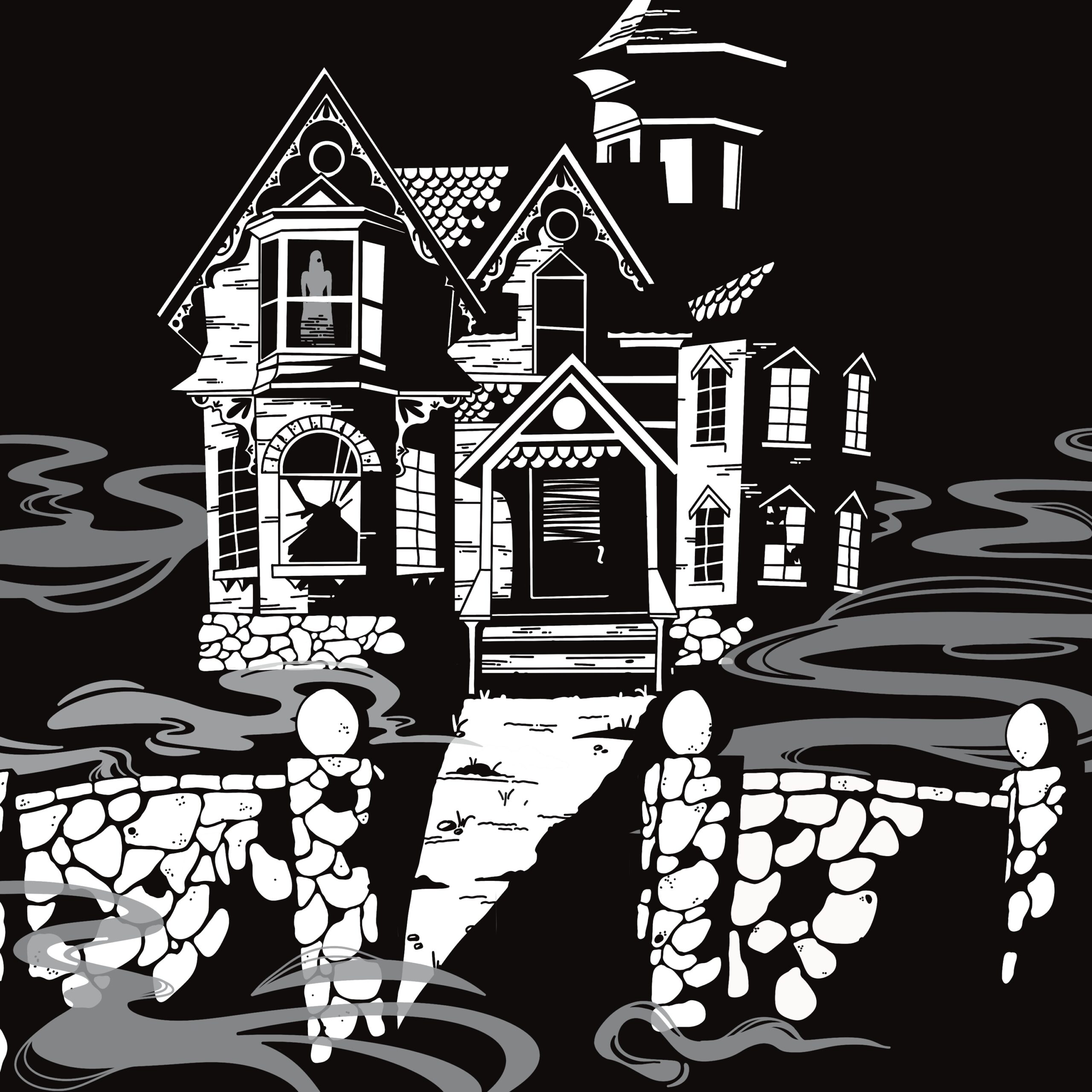
I’ve started a playtest draft of my next project, a gothic mystery scenario called The Haunting of Dresden Manor. I’m excited by this project because I believe that it pushes the boundaries of mystery scenario design in TTRPGs, because it will simultaneously be:
- A mystery scenario with a “right answer” that players actually need to solve at the table. Okay, that’s not that special. But The Haunting is also
- a mystery scenario with a villain that can change between playthroughs, making it replayable and different every time. That’s less common, but it’s been done (think Waterdeep: Dragon Heist for 5e). But The Haunting is also
- a mystery scenario that is immersive, yet easy and fun for any DM to pick up and run, and for players to investigate and solve, with minimal prep.
If you’ve ever tried to run a proper investgative mystery scenario, you’ll know that that last one is the real magic trick. The internet is full of advice about what to do if your players miss a key clue. And what about that fear that one of your players snuck a look at the casebook? Some mystery systems solve that by rejecting the idea of a “right answer” entirely (e.g., Brindlewood Bay), but that’s not satisfying to many of us. We want to solve puzzles!
I believe that my framework for The Haunting of Dresden Manor solves both of those problems. It distinguishes early Clues from compelling Evidence, creating support for investigation; and gives GMs tools to keep the investigation moving forward without making dice rolls meaningless. How, you ask? To explain that, I’d like to first start with…
The History of Dresden Manor
I initially conceived of The Haunting of Dresden Manor as a scenario to playtest a card game I was designing called Crooked Rooks. My goal was to create an ultra-rules-light gothic mystery investigation game that used cards rather than dice. I needed a mystery to test my game against, so I ginned up a one-page scenario to use for playtesting, The Case of the Bedridden Bride.
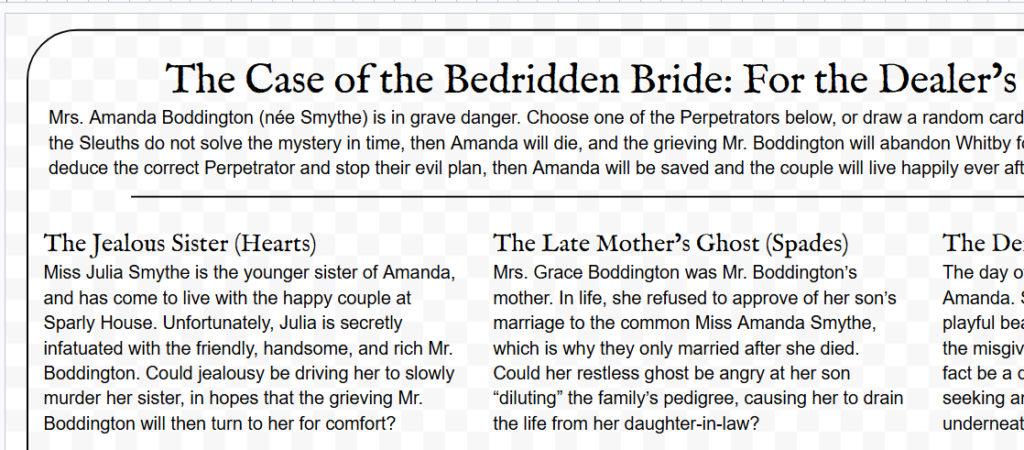
My playtests of Crooked Rooks… didn’t go great. (I’ll get back to it one of these days, I swear! The duality dice from Daggerheart have given me some interesting ideas for a better way to use the suits of cards in the deck.) But while running it, I realized that the ultralight framework I’d developed to create casebooks for it was actually both fun and useful, because It gave me a way to outline clue-rich mysteries that I could easily adapt to almost any RPG system.
Building the Manor
For a year after that, the idea of turning that one-page casebook into a full-fledged mystery scenario, complete with the intricate clues and other immersive techniques that I use in my mysteries, rattled around in my brain. I’ve created a lot of complex mysteries, but none of them had three different potential perpetrators, with different sets of clues, chooseable at playtime, for which I’ve also created distinct props. I knew that it would be a significant undertaking.
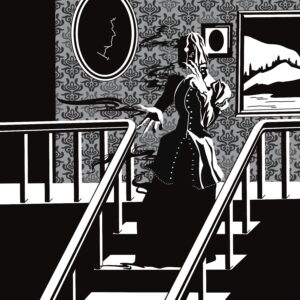
Last summer, I decided that the best way to move forward was to bring this project to the crowdfunding community. For my first step, I commissioned a SoCo-local artist, Sara Lokken, to create concept art for the scenario, which I had by now renamed to The Haunting of Dresden Manor. Sara had previously done some of the art for Tarotweaver, another SoCo-local TTRPG that successfully funded on Kickstarter. Sara’s art was awesome, and further confirmed my desire to bring this project to life.
Playtesting the Mystery
Now that I’ve got some art with which to promote The Haunting, my next step is to playtest the scenario. To do that, I need to turn my one-page casebook into a collection of interactive, immersive clues. I’m now writing up an expanded version of the casebook that divides my old clues up into two categories: Clues and Evidence; and elaborates on the Threats and Dangers that each perpetrator will use to keep the investigators from discovering the truth.
Once I’ve got that outlined, my next steps will be:
- Make physical handouts for the Evidence and a few of the Clues
- Run playtests of the scenario, where I won’t decide who the villain is until I sit down at the table with the players. That will be the first real test of whether or not my model makes the mystery easy to run without prep.
- Get the scenario into the hands of other local GMs and get their playtest feedback.
- If things still look good for this project, put it on Kickstarter and apply for Zine Quest!
As I get further along with playtesting, I’ll go into more detail about the mystery mechanics. I think they’re great, but I won’t know that for sure until I’ve tested them against actual players; and it seems premature to brag about them until I’ve got supporting data. In the meantime, though, if you want to hear more about this project or want to be one of my playtesters, sign up for the Riddle & Rook newsletter and follow us on Instagram, because that’s where I plan to advertise playtesting sessions!