
Introduction
Fantasy worlds mostly seem to be driven by gold: pockets, chests, and even hoards full of shiny, cold, golden coins. And silver, copper, mithril, and adamantine, too! (Find those last two on the periodic table, I dare you!) If you ever sit down to do the math, the average 20th level D&D adventurer probably has more cash on hand than the average king or queen. Which makes you wonder, just how does the fantasy economy work? If gold is so common, why is it valuable? How do economies not become completely distorted when adventurers walk into town, throwing that cash around?
Now, I often tell my players that RPGs are not physics simulators; we take a lot of liberties with what would actually work to facilitate relatively quick world simulation and story progression. Officially. I say the same about economics: I don’t want to ruin a good dragon hunt with supply and demand! If getting paid to go on an adventure motivates your PCs because it motivates your players, that’s just fine for storytelling purposes. Few of us are trying to tell truly period-accurate stories.
But… sometimes it’s useful or interesting to understand how things actually worked, either to create a more interesting story, or to create more immersive worlds. So I’m planning a series of blog posts, called “What Your Characters Know,” to share some of what I’ve been learning about ancient life. Feel free to use as much or little of this as you like. Today, I’m going to share with you just a little bit about spinning wool into yarn.
Spinning Wool into Thread
In the modern era, it’s really hard to imagine the economic value of wool to the pre-modern world. Sure, we can talk about the market value of clothing companies or the total GPD of cloth- and fabric-producing companies, but we live in a world of artificial fabrics and computer technologies. Prior to industrialization, cloth was a critical part of the medieval economy! You didn’t just need it for clothing, but also for things like the sails of ships (and windmills!) or decorative items like tapestries. You also had a very limited set of materials from which to make this “cloth:” flax, leather, or wool. So, in an era before motors and plastic and steel mills, wool and cloth production was literally central to many economies; and your characters would know that.
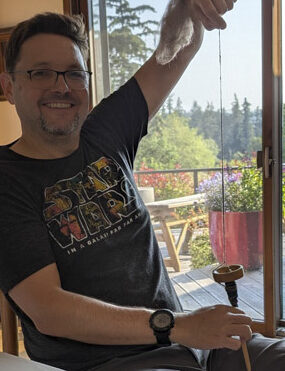
Earlier this month, I got to try my hand at actually spinning yarn. My cousin, R, has been spinning and weaving for years, and was generous enough to bring her drop spindle and spinning wheel to a family reunion. I preferred the drop spindle, although I doubt that my thread would have satisfied even the most generous of medieval peasants. According to R, medieval women would carry a drop spindle and raw wool with them at all times, and as they walked or otherwise found their hands free, would spin the wool into thread. My brother-in-law W had more success than I did with the spinning wheel, but I can still see how that innovation would have accelerated the spinning process and created economic value.
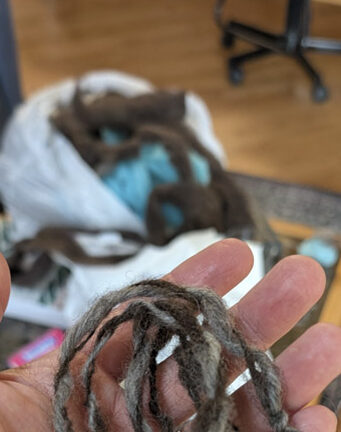
This experience helped me understand just how labor-intensive producing cloth from wool actually was. First, you had to build up your herds of sheep to produce the raw wool, which you can only shear once or twice per year. Then, you had to spin that wool into thread, which (as I now know) requires both skill and time. Finally, once you had enough thread or yarn, you could knit it into clothing or weave it on a loom into a sheet of cloth. Since this process could take up to a year, involving many laborers’ work, with many opportunities for something to go wrong; and since raw wool, spun yarn, and finished cloth would all have been fairly portable, there were very valuable trade goods and could drive the economy of an entire region. (I’m familiar only with the history of Europe and the Middle East, but evidence indicates that spinning and weaving was just as important, and often technologically more advanced, in many parts of Asia and pre-contact North and South America, too!)
This importance also transferred into culture. Spinning and weaving are central parts of many myths and fairy tales:
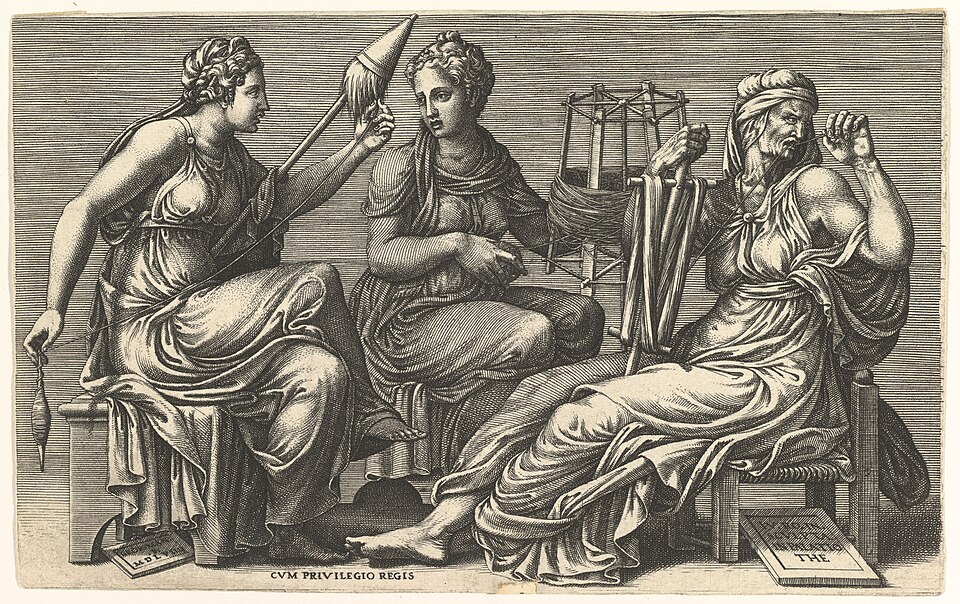
- The three Fates “spun” peoples’ futures
- Athena turned Arachne into a spider after the mortal beat her in a weaving competition
- Hercules was killed by a cloth garment soaked in hydra venom
- Rumpelstiltskin could spin straw fibers into golden thread
- Sleeping Beauty pricked her finger on a spindle
- Redcaps, violent little faeries, derived their names from cloth caps dyed red with the blood of their victims
- The original lyrics to the song Scarborough Fair included a challenge to make a shirt with no seams
- The Golden Fleece, sought by Jason and the Argonaughts, is one of the greatest MacGuffins in all of literature, period
Et cetera. And these are just the stories about which I know; I’m sure that most non-western cultures have their own such legends!
How to Use This
If your characters are from a fantasy economy, they would likely “know” all of the above. If money is important in your game, and if you and your players want to simulate a more realistic economy, consider leaving bundles of thread or bolts of cloth in treasure hoards, instead of coins. If that’s too much accounting, you can still use wool, thread, and cloth as motives for NPCs, which they are happy to transform into coins for your more economically mobile PCs. For example, a shepherd could hire them to protect his flock, or find his missing sheep; and a merchant could hire the PCs to guard his wagon or ship.
Also, since it’s a fantasy world, here are a few more ideas to help bring your world’s economy to life:
- What special properties might the wool or hair of magical creatures have if woven into fiber? Is there a legendary herd of sheep with magical wool, or perhaps silk from giant spiders or a particularly rare byssus? What about the strands of hair of an elf-queen or an ancient spirit?
- Practitioners of a magical tradition could prepare spells by trapping magical power within a thread that they weave with a dropspindle; and then they release the spell by cutting or unravelling the thread. Do they use knots and knitting for their more powerful magic? What would happen to their fibers after they die?
- Could a group of militant weavers use their drop spindles and thread as weapons, similar to a chain whip, rope dart, or (my personal favorite) meteor hammer? Pity the bandits who prey upon those weavers!
- It is easy to adjust the thickness of a thread as you weave it. Could a particularly skilled weaver encode secret messages in a thread? Or perhaps a carving of an ancient goddess of weaving hides a secret message?
- Could cloth or thread soaked in a magical liquid work similarly to potions? E.g., a bandage of healing, a thread of invisibility, or a headband of heroism?
- Could a wizard or divinity bind people with magical threads, controlling their actions like a puppeteer, or just limiting them ? Instead of undead knights, they might need to battle through an army of “threadspun knights.” How might the heroes discover and undo this curse? How will they feel about fighting enemies not in control of their own actions? What if the heroes themselves are the victims of such a curse?
- Perhaps a group of smiths has invented a way to spin metal threads. What benefits might a shirt or cloak of steel cloth provide? How might the wool industry respond to this upstart?
Conclusion
I had a lot of fun trying out spinning, and look forward to trying out other traditional crafts and sharing what I learn with you. If you found this useful or interesting, please let me know at john@riddleandrook.com!